
Unified communication for every health setting.
Secure, integrated communication for hospitals and residential aged care.
Connect your people, systems, and devices from nurse call to duress alerts, all on one platform built for every level of care.

Integrate your existing facility and clinical systems into a single platform to deliver workflow efficiency and improved care outcomes.

Collaboration and alerting in using a secure communication app designed for the robust demands of healthcare settings.

Deliver communication outputs to any or all relevant channels, including private, encrypted paging, DECT phones, email, SMS and more.
Unified communication for health, acute and residential care.
From major metropolitan hospitals to regional aged care facilities, the healthcare sector faces a common challenge: delivering safe, quality care with a mobile, multi-disciplinary workforce operating in complex environments and across all hours. Whether you manage a busy emergency department or a residential care home, your teams need to communicate instantly, collaborate securely, and receive critical alerts from the systems that keep your patients and residents safe.
Ikonix Technology delivers a unified communication platform purpose-built for the full spectrum of care settings. Our solutions integrate with what you already have, including nurse call, building management, duress alarms, and clinical systems. We connect your people on their preferred devices, from smartphones to pagers. The result is faster response, more efficient workflows, and safer outcomes across your entire organisation.
- Integrate once, reach everyone everywhere: Connect nurse call, BMS, duress, and clinical systems into one message integration engine. No more silos, no more manual workarounds.
- Built for critical environments: Proven in live hospital operations and aged care facilities across Australia. Delivers the resilience that healthcare demands.
- Lower complexity, faster results: You don’t need to replace your existing systems to benefit from ours. We integrate with what you have, reducing project risk and accelerating time to value.
The solution for acute care: hospitals and health networks.
Hospitals are among the most demanding communication environments. Thousands of staff, life-critical code calls, and a constant flow of information must be managed with precision. This is why major Australian hospitals rely on the Ikonix Unified Messaging Suite.
- Role-based specialist access. A clinician needing a cardiologist can search by role and reach the on-call specialist immediately, no more paging through the switchboard.
- Code call coordination. Critical alerts bypass silent modes on smartphones, playing a distinctive tone until acknowledged. Response groups can see who has responded, ensuring there is no uncertainty. Alerts follow pre-configured escalation workflows and are sent to any or all personnel you require.
- Facilities integration. Infrastructure such as BMS can use our Message Integration Engine to message the maintenance team about HVAC failures, boiler issues, or pharmacy fridge temperature variances, with accept/decline responses tracked across the group.
- Paging support built in. Leverage the dependability of paging for areas with poor mobile coverage, while integrating it seamlessly with our modern smartphone app, and modernised with military-grade encryption to protect patient information.
- Switchboard efficiency. Uplift the switch’s capabilities with a browser-based console that offers programmable hotkeys, live directory access, and on-call rostering, turning the switchboard into a hub of operational efficiency.
- Personnel duress and asset tracking. RTLS locator beacon technologies support the safety of your personnel with a directed security response, and ensure that critical equipment, such as infusion pumps, wheelchairs, and diagnostic devices, is found quickly and not lost between wards.
- Audit and compliance. Healthcare operates under rigorous regulatory oversight. Every message sent through the platform is timestamped and logged in an immutable audit trail. Investigate who communicated what and when. This becomes essential for incident review, compliance reporting, and quality improvement.
Proven in the field: The Ikonix Unified Messaging Suite has been deployed across more than 40 hospitals, including some of the largest and busiest hospitals in the country in three capital cities.

The solution for residential care: efficiency and quality.
Aged and other residential care providers face staffing shortages, strong care-minute targets, and the need to deliver quality care across multiple sites. Our platform directly addresses these challenges.
- Integrated nurse call. A resident pressing their call button can trigger an alert to all or a group of staff via Ikonix Connect, not just a fixed station. This ensures someone is always aware, even if the primary caregiver is occupied.
- Automated nurse call. By integrating intelligent monitoring and detection systems like the Ascom teleCARE IP, responding personnel can be automatically notified of events such as elopement or falls, without the resident needing to activate an alert.
- Meeting care-minute mandates. RTLS can passively track staff time in resident rooms, providing compliance data without manual notetaking. Ikonix Connect enables quick job dispatch and acknowledgement, ensuring tasks are completed and recorded.
- Multi-site resource sharing. When a registered nurse is shared across facilities, role-based messaging ensures care staff at any site can find and contact them when needed. On-call rosters visible to all team members ensure there are no coverage gaps.
- Infrastructure monitoring. Automated alerts from refrigerators, HVAC systems, or security sensors ensure that facility issues are addressed before they affect resident comfort or safety.
- Infection control. Hardware such as the Ascom Myco smartphones is IP-rated for dust and liquid resistance, allowing thorough sanitisation. Intelligent mounted displays can convey messages to staff without any direct contact with a device.
- Resident safety. Wearable duress pendants or wristbands allow residents to summon help in case of a fall or medical need. RTLS geofencing alerts staff when a resident with cognitive decline wanders from safe areas.
Proven in the field: Ascom Telligence is deployed globally in major hospitals such as Sengkang General Hospital in Singapore and the US and UK. The technology delivers documented savings of 40 minutes per bed turnaround and 15 minutes per patient in theatre recovery.

Integrated alerts for healthcare.
Healthcare environments generate critical alerts from countless systems: nurse call systems, building management systems, duress alarms, and medical devices. Our Message Integration Engine (MIE) ingests data from over 90 different sources and routes it through intelligent workflows to the right person on the right device. This eliminates silos, automates responses, and ensures no alert goes unanswered.
- Data from any source. Nurse call, BMS, fire panels, duress alarms, refrigeration monitors, and clinical systems all feed into the MIE using standard APIs or hardware interfaces.
- Intelligent routing. Custom workflows determine who needs to know and how. For example, a pharmacy fridge temperature monitor alerts the on-call technician via a smartphone priority notification, as well as the pharmacy Head of Unit without priority, to ensure surveillance.
- Automatic escalation. If an alert isn’t acknowledged within a set time, it escalates to the next responder or group, ensuring critical events are always handled.
- Multi‑channel delivery. The same alert can simultaneously be sent to Ikonix Connect, pager, SMS, email, or a visual display. These can be tailored to each recipient’s role or requirements.
- Vendor‑agnostic integration. Proven with systems from Ascom, Rauland, Acetek, Hills, and many more, the MIE connects to both new and legacy infrastructure without needing expensive replacements or changes.
- Auditable trail. Every alert, acknowledgement, and response is timestamped and stored, providing full visibility for compliance reviews and incident investigations.

Secure collaboration for mobile workforces.
Hospitals and enterprises rely on large, mobile teams that need to communicate instantly and securely. Ikonix Connect is a purpose‑built smartphone app that integrates with your directory, enables role‑based messaging, and delivers critical alerts to the device in your pocket. It ensures the right person is reached, the message is acted on, and patient or operational data stays protected.
- Role‑based messaging. Staff find colleagues by role (e.g., “on‑call cardiologist”) rather than name, eliminating manual roster checks and reducing response time.
- Secure media sharing. Photos, videos, and documents are captured and shared within an encrypted environment, separate from personal device data, to prevent accidental data spills.
- Message acknowledgement. Senders can request read receipts or accept/decline responses; for group messages, all responses are tracked and visible to everyone.
- Critical alerts bypass silent mode. Users can send priority messages that override do‑not‑disturb settings, playing a tone until acknowledged. This ensures a quick response in emergency situations and fewer missed messages.
- Directory integration. Syncs with Active Directory or other identity software or directories, keeping contact details up to date while allowing staff to hide private numbers from the broader workforce.
- Shared device support. Shift workers can log in to a common handset; all communications are correctly attributed, maintaining audit trails without needing individual devices.
- Desktop access included. A browser-based interface provides the same experience and functionality on workstations, ensuring seamless collaboration between mobile and station‑based staff.

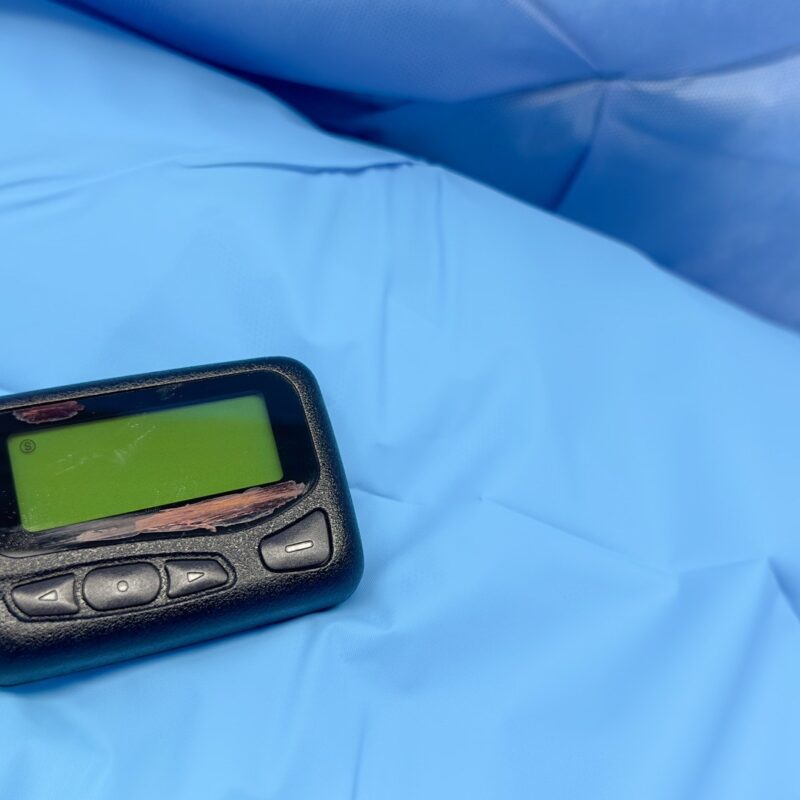
Reliable paging for critical alerts.
When mobile networks face congestion and coverage issues, paging remains a dependable channel for urgent messages. Network owners can scale up and manage their local coverage to ensure environmental changes, such as new construction, can be quickly accounted for. Our paging infrastructure is not a legacy afterthought; it is an intelligent output of the Message Integration Engine, delivering encrypted, congestion‑controlled alerts to pagers anywhere in your facility or across a city.
- Guaranteed delivery. Automatic re‑broadcasting and closed‑loop validation ensure every message goes to air and is received intact.
- Encrypted for security. 128‑bit AES encryption protects sensitive patient and operational data, meeting defence‑grade standards.
- Built‑in congestion control. Prioritises critical code calls and duress alerts, delivering them in under 5 seconds even during peak traffic.
- Scalable coverage. From in-building distributed antenna systems (DAS) to citywide paging networks, the same engine powers networks of any size. Ikonix Technology’s paging networks cover more than a quarter of all Australians.
- Seamless integration. Pages can be triggered automatically by nurse call, BMS, duress, or other systems connected to the IUMS, or sent directly from Ikonix Connect smartphones or the browser-based switchboard consoles.
Live visual displays for situational awareness.
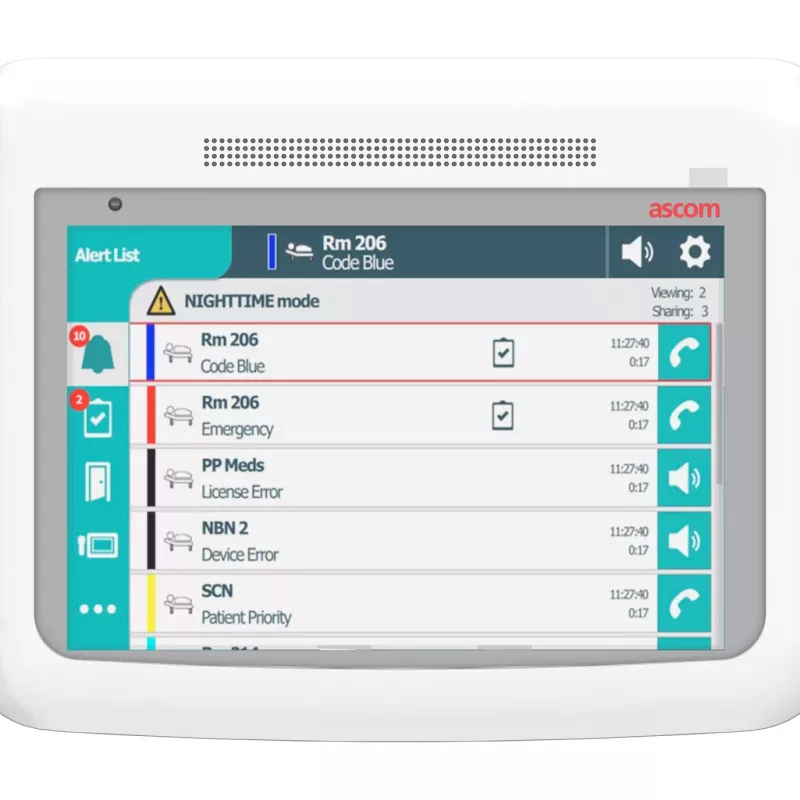
When seconds count, responders may need more than a text alert; they need to see exactly where to go. Our system upgrades any monitor, pulling live data from the Message Integration Engine to display critical text messaging, location maps, or location-relevant information. Proven in Emergency Departments and Mental Health Units, it gives security and clinical teams instant visual clarity during an incident.
- Real‑time incident mapping. Duress alarms and safety alarms from integrated fire and security systems appear on a facility map overlaid with precise location, eliminating guesswork for responders.
- Visible and audible alerts. Screens announce critical information with optional audible tones that draw immediate attention, ensuring no alert is missed. Alerts and tones can continue for your chosen duration or until resolved by the connected system.
- RTLS integration. Displays live tag tracking, showing movement during evolving events so security can coordinate precisely.
- Reduce clutter and alarm fatigue with fewer dashboards. Because these displays are an output of the IUMS, pulling alerts does not require staff to monitor separate systems or build custom views. Collate multiple endpoints into one.
- Location‑specific content. Each display can be tailored: a security command centre can see duress alerts, a staff station can display nurse call feeds, or a common room can announce code calls.
- Scalable and hardware‑agnostic. Works with existing displays, or we can source screens specifically selected for the installation destination and connect them via Ethernet or Wi-Fi for flexible deployment.

Ascom Telligence: advanced patient response for hospitals.
Modern hospitals need nurse call systems that do more than ring a bell. Ascom Telligence is a next-generation patient response system designed for today's interconnected, digital healthcare environment. It collates data from the patient, medical devices, and clinical systems, presenting it at the point of care. With open, standards-based architecture, Telligence becomes a central hub for clinical workflow coordination, scalable from a single ward to a multi-site health network.
Core components
- Point-of-care hub: Centralised task management at the bedside. Displays patient information, tracks tasks, and enables audio communication with labs, pharmacy, and other departments. HL7-compliant for seamless data integration with EHR/EMR systems.
- Pillow speaker: Award-winning design empowers patients to make specific requests (pain, water, assistance). Ascom SafeConnect™ magnetic connector ensures easy access and device security.
- Automated staff presence: Tracks when staff are at the bedside, in rooms, and in clinical areas. Records response times, time in the room, and last known location, improving accountability and workflow analysis.
Key benefits for hospitals
- Patient empowerment: Pre-defined requests from the bed help reduce response times and give patients a voice in their care.
- Workflow efficiency: Centralised creation, management and tracking of tasks supports patient-centred care and helps clinicians focus on what matters most.
- Open architecture: Standards-based and vendor-agnostic, Telligence works with third-party medical devices and communication systems. Modular design means you can add functions over time.
- Documentation support: Streamlined documentation enables fast updates to EHR/EMR systems, reducing duplication and freeing time for direct patient care.
- Reporting and analytics: Pre-installed and customisable reporting forms provide the data essential for continuous improvement.
Ascom teleCARE IP: intelligent monitoring for residential care.
Residential aged care requires more than a simple call button. Residents need discreet support that respects their dignity, while carers need intelligent alerts that help them prioritise care. Ascom teleCARE IP is a flexible, modular ecosystem of connected technologies designed specifically for assisted living and long-term care settings. It scales from single rooms to multi-site operations, giving you a complete solution for resident monitoring, wander management, and staff response.
A comprehensive portfolio of connected devices
- Wearable pendants and wristbands: Sleek, award-winning design with IP67 dust and water resistance. Large, easy-to-push button for residents to summon assistance. Accurate location function helps staff find residents quickly.
- Room controllers: Decentralised IP architecture eliminates single points of failure. Manages alerts and escalations within its area. Supervises connected bedside modules and call signalling.
- Bedside modules: Customisable call modules with RJ-45 connectors for pre-terminated cabling. Magnetic connector for bedside handsets. Sealed membrane design for safe, hygienic cleaning.
- Wireless sensors: Motion detectors for rooms, windows, doors and beds. Functions as a smoke detector. Adaptable to match specific residents, unobtrusive and discreet.
Key benefits for aged care providers
- Resident reassurance: Residents and their families know alerts will always be responded to, providing peace of mind.
- Reduced non-productive work: Carers can use smartphones to determine if they need to personally check on a resident, saving unnecessary room visits.
- Operational continuity: Decentralised architecture ensures the system continues functioning even if individual components fail.
- Automatic escalation: Alerts are automatically routed to colleagues until someone responds. No call goes unanswered.
- Reporting and analytics: Automatically logs key operational data such as response times and bed occupancy for compliance and continuous improvement.

Ikonix Technology powers communication at every level of healthcare.
Across acute and residential care, the challenges may differ, but the solution is the same: a unified communication platform that connects people, systems, and devices. By integrating with what you already have, respecting the tools your staff use, and adding intelligence and automation, we help you deliver safer, more efficient, and higher-quality care.
Ikonix Connect has been deployed to clinical teams across Adelaide hospitals.
Used across SA Health, the secure smartphone app enables role-based messaging and critical alerts that override silent mode. Clinicians find the right on‑call specialist instantly, share images securely, and receive system alerts, all on the device they already carry. It’s transforming collaboration for thousands of healthcare workers.
The IUMS powers communication in dozens of hospitals across the country.
Powering over 40 Australian hospitals, Ikonix Messenger ingests data from nurse call, BMS, duress, and clinical systems. It applies intelligent workflows to route alerts to the right person on any device. Hospitals eliminate silos, automate responses, and reduce complexity, all without replacing existing infrastructure.
Our paging networks cover more than a quarter of Australians.
We operate the HIRPN network, covering all of metro Sydney, and the HPS network across Adelaide: both critical infrastructures trusted by hospitals and emergency services. These private paging networks deliver encrypted, congestion-controlled messages to areas where mobile networks fail, ensuring reliable communication for frontline teams.
Our latest innovation sees safety information broadcast to intelligent displays.
Deployed in multiple SA Health sites, including The Queen Elizabeth Hospital, Ikonix Billboard turns RTLS data into live visual maps. When a duress alarm triggers, security sees the exact location overlaid on a facility screen. Audible and visible alerts ensure rapid response, proven in emergency departments and mental health units.
As a communications innovator, Ascom sets the global standard with its platforms.
Ascom’s teleCARE IP and Telligence platforms are trusted worldwide. In Singapore, Sengkang General Hospital uses Telligence to streamline workflows, saving 40 minutes per bed turnaround. In the UK, Wren Hall Nursing Home credits teleCARE IP with reducing falls and giving residents confidence, proof that integrated care communication works at scale.
Powering responses to challenging behaviour, RTLS deployments are protecting SA Health workers today.
AiRISTA RTLS, deployed by Ikonix at TQEH, powers precise personnel tracking on Billboard displays. Staff duress tags send location‑aware alerts to security, and the system also tracks equipment to reduce search time. It’s the same proven technology that protects workers and assets in hospitals, industrial sites, and aged care.
Frequently Asked Questions (FAQ)
Critical messaging is any time-sensitive information shared to protect people's lives, key assets, or as a priority. In a hospital, this could be a Code Blue alert or a duress alarm. In aged care, it might be a fall alert or a rapid response request. Our platform handles critical messaging with prioritisation in Ikonix Connect, critical alerts can override a phone's silent setting, ensuring they're noticed immediately.
Data security is integral to our design. In Ikonix Connect, data is encrypted on the handset and on the server and transmitted through secure, private connections. For backend infrastructure, you can choose on-premises deployment within your own controlled network or cloud hosting in onshore Australian data centres (e.g., AWS). All data is stored with AES-256 encryption and is accessible only to authorised personnel. Experts have independently tested our security.
Most likely, yes. We have extensive experience integrating with a wide range of nurse call systems, including Ascom, Acetek, Hills Health, Merlon, Questek, and Rauland. If your system has an API, integration is typically straightforward. For hardware solutions, we can assess the design and develop a connection.
Paging remains vital in healthcare because it works where mobile networks fail, penetrating concrete buildings, reaching underground areas, and operating on dedicated frequencies unaffected by carrier congestion. Our approach modernises paging by integrating it with your broader communication systems. Pages can be sent from Ikonix Connect smartphones, automatically triggered by integrated systems, and encrypted to protect sensitive information.
A Message Integration Engine, like Ikonix Messenger, is middleware that connects all your disparate systems, nurse call, BMS, duress, clinical applications, so they can communicate with each other and with your people. Without it, each system operates in a silo, requiring manual intervention to move information between them. The MIE bridges that gap, so alerts automatically trigger notifications to responders via their preferred devices.
In Ikonix Connect, personnel can be assigned on-call roles with visible schedules, so colleagues know who is available for consultation at any time. Roles and shifts can be handed off between people throughout the day, ensuring coverage. If someone goes offline, messages to their role are automatically routed to the next available person.
Yes. The hardware we provide, such as Ascom Myco smartphones, is IP-rated for dust and liquid protection, allowing thorough cleaning with hospital-grade disinfectants. For maximum infection prevention, the Ikonix Billboard displays information to staff without any device contact.
Absolutely. The platform is designed to scale from single facilities to large multi-site networks. For hospitals, this means supporting communication across an entire Local Health Network. For aged care providers, it enables resource sharing and consistent communication across multiple residential homes.
Hospitals, with their thick concrete and steel construction, often have areas where mobile signals don't penetrate, such as radiology departments as a common example. We work with our partners to conduct site-by-site signal-strength testing and can deploy distributed antenna systems to improve coverage in these areas. Additionally, because paging operates on longer radio wavelengths, it often reaches areas where mobiles cannot, providing a reliable backup.
Ready to improve communication across your hospital or aged care facility?
Contact Ikonix Technology today to discuss your requirements and learn how our platform can help you deliver safer, more efficient care.