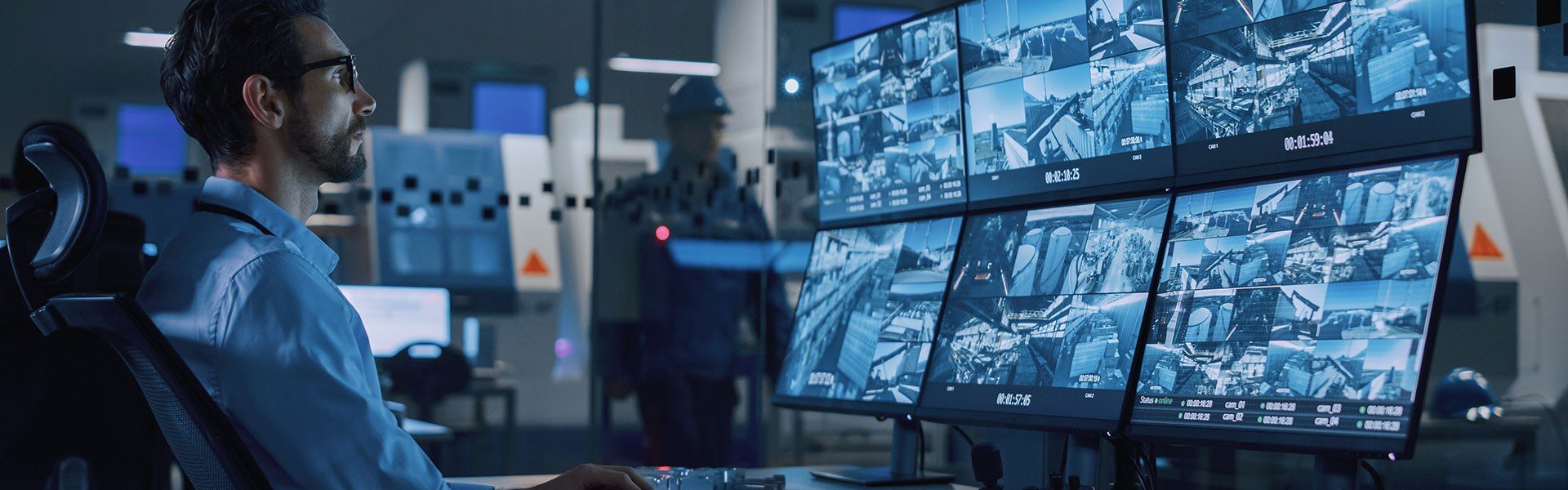
Real-time safety technology to protect people & assets.
Protect your people and assets with real-time tracking and duress alerting.
Instant alerts, precise and live-updating location tracking, and automated distribution—all integrated with your critical communication platform.
Real-time safety & response to protect people and secure assets.
Track personnel to inform and direct the security intervention when someone is in distress.

Track important assets as they move within your facility to prevent expensive loss or theft.

Integrate fixed or mobile alerts, sending alerts to pagers, smartphone or displays.
In hospitals, residential care, industrial sites, and most other enterprises, the safety of people and the security of your assets are paramount. Frontline workers face rising risks of workplace violence, critical equipment is constantly moved and misplaced, and vulnerable individuals require discreet monitoring.
Ikonix Technology delivers integrated real-time safety solutions that combine best-in-class Real-Time Location Services (RTLS) from AiRISTA with the power of the Ikonix Unified Messaging Suite (IUMS). As a trusted distributor and installer, we deploy systems that track location, detect duress, monitor custom condition parameters, and automatically trigger the right response—all through a single platform that integrates with whatever infrastructure you already utilise.
RTLS intelligence integrated with critical communications.
Real-Time Location Services (RTLS) provide the intelligence layer for modern safety and operational workflows. Using technologies such as Wi-Fi, Bluetooth Low Energy (BLE), and Ultra-Wideband (UWB), RTLS tracks the precise locations of people and assets throughout your facility.
AiRISTA’s RTLS solutions transform this location data into actionable insights. By integrating this intelligence with our core Message Integration Engine (MIE), location-aware alerts become an integral part of your communication ecosystem. A duress alarm is no longer just an alarm—it is a precise location, an automated workflow, and a targeted notification to the right responders, on their preferred device. This could include a pager over your private network, a push notification to a team’s smartphones, or live updates on a map displayed on monitors throughout the facility.
Beyond the AiRISTA system we’ve chosen to distribute, Ikonix Technology also works with a variety of other RTLS platforms, from the latest Sonitor installation to the now-deprecated Bosch Security Escort.

Personnel safety with instant duress and their precise location.
Workers in healthcare, education, and industry often need a discreet, reliable way to call for help. Our mobile duress solutions, using AiRISTA’s advanced wearable tags, provide exactly that.
- Discreet duress activation: Wearable tags, available as ID-style badges (B4i, B6), wristbands (eTW2), or clips (eTB1), feature a simple button or pull-cord to raise an alarm instantly, without drawing attention.
- Precise location tracking: Tags leverage your Wi-Fi or BLE infrastructure to provide real-time location, accurate to within just a few metres. Responders know exactly where to go.
- Automated man-down and no-movement alerts: Tags can automatically raise an alarm if a worker suffers a fall or does not move for a set period, triggering a welfare check.
- Critical alert integration: When an alarm is raised, our MIE ingests the event and executes your predefined workflow. This can include:
- Sending a priority message to security teams via Ikonix Connect, overriding silent mode to ensure the message is noticed,
- Displaying the exact location on a facility map in the security command centre, or at strategic locations on a ward or production area, or
- Paging the response team through the paging infrastructure for a message broadcast faster than SMS
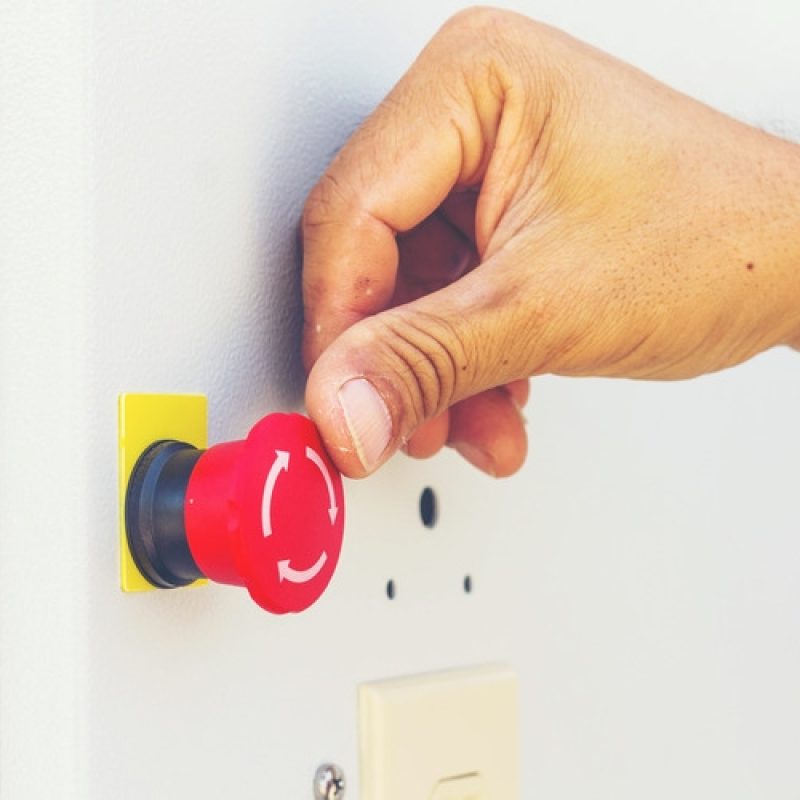
Asset tracking for loss prevention.
Time spent searching for misplaced equipment is wasted, and delays more productive (and less frustrating) tasks your team could be focusing on. RTLS transforms asset management by providing real-time visibility into the location of your vital assets.
- Real-time equipment location: Attach small, durable locator beacons (e.g., AiRISTA A4n [LINK], eTA1) to infusion pumps, ventilators, or laptops and tablet PCs. Staff can instantly locate needed items via a central dashboard or an integrated app.
- Theft and wander prevention: Configure geo-fences around designated areas. If an asset leaves a permitted zone, or a vulnerable patient or resident wanders beyond a safe boundary, an immediate alert is triggered.
- Utilisation insights: Track how often and where assets are used, enabling better inventory management, reduced purchasing, and optimised asset distribution.
- Environmental monitoring: Specialised tags (e.g., TS1 temperature sensors) can monitor conditions like temperature and humidity in critical storage (pharmacy fridges, labs, cold chain), alerting staff to issues before spoilage occurs.
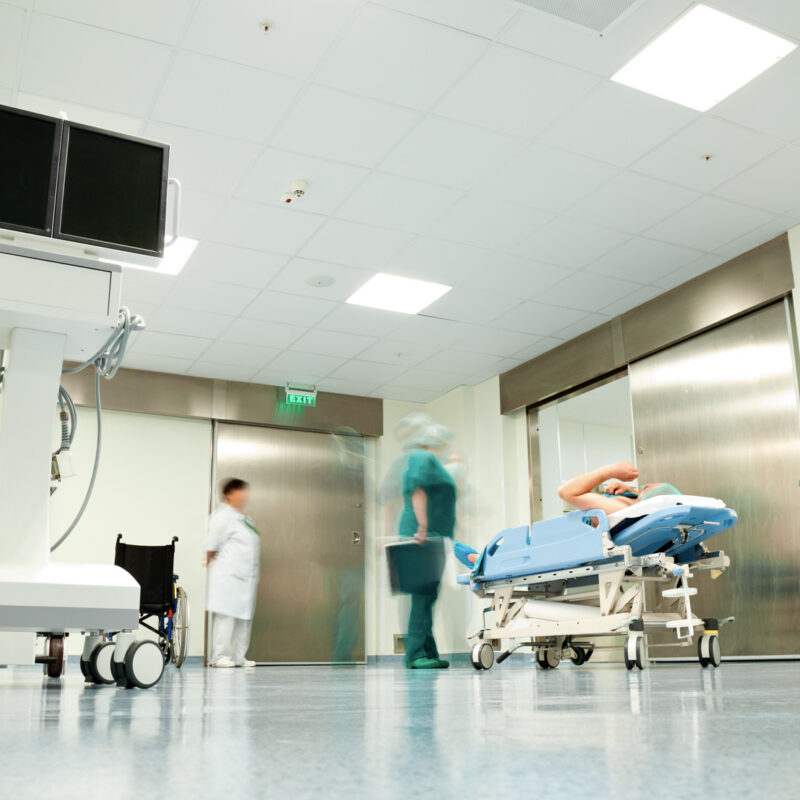
The Integration Advantage.
The true power of these solutions is realised when data is not just displayed but acted upon.
- From sensor to responder: A duress pull on a B4i badge is not just a light on a panel. It becomes a targeted, multi-channel alert: a critical push notification to security officers' Ikonix Connect apps, an audible-visual alarm on a map display in the command centre, and a logged event in the audit trail.
- Automated workflows, reduced response time: By automating the notification process, we eliminate the seconds or minutes lost to manual phone calls and radio checks. Responders are dispatched instantly with precise location information.
- Unified visibility: Whether it's tracking a patient at risk of eloping, locating a lost infusion pump, or responding to a staff duress alarm, all information flows through a single, unified platform. This provides complete situational awareness for security, clinical, and facilities teams.
- Vendor-agnostic integration: We already connect over 90 common systems. This means the Message Integration Engine can accept and display information from your existing hospital or facility technologies with minimal effort, and, importantly, a lower time to go-live and reduced capital expenditure.
- Fixed duress for known risk areas. In predictable, high-risk locations, such as reception desks, triage stations, or behavioural health units, fixed duress systems provide a simple, always-available safety net. Wired buttons or pull-cords allow anyone at that location to summon immediate assistance. These are integrated, and the information is ingested into the same platform and custom workflows, to ensure your team has the same experience across alert time and less confusion.
- Enhanced with other alert types. More than personnel duress or equipment movements. The same system can bring together situation-specific alerts, such as door-top alarms for at-risk patients, as well as fire- and smoke-detection and break-glass alarms. Everything comes together on one platform for easier, faster communication outcomes.

Live visual display, with RTLS data on intelligent displays.
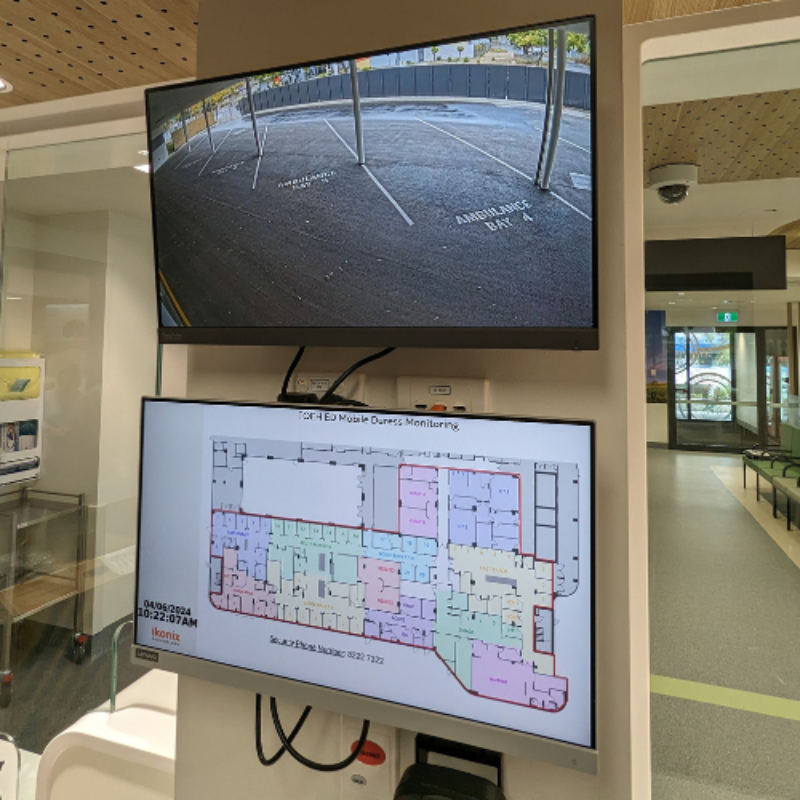
When every second counts, responders need the clearest possible picture of an incident. Our display solution transforms RTLS location data into a live, visual command interface displayed on screens throughout your facility.
- Real-time incident mapping. When a duress alarm is triggered, the monitor displays a facility map with the exact location overlaid, down to the room or custom zone. Security personnel can instantly see where help is needed, eliminating confusion and guesswork and getting to the scene faster.
- Visible and audible alerts. Critical alerts can be accompanied by both on-screen notifications and audible tones, ensuring the command centre or staff area is immediately aware of an unfolding situation. The display can show live tracking of a duress tag's movement during an evolving incident.
- Customisable for any location. The displayed content can be tailored to the specific needs of each location—a security command centre requires different information than a ward corridor or waiting area. All displays remain connected to the same real-time data from the MIE.
- Fewer dashboards, better use of space. Because the displays connect directly to the Message Integration Engine, they provide an immediate visual feed of communications traffic—duress alerts, code calls, and other critical updates—without requiring staff to monitor separate systems or build custom dashboards. We know our customers can be frustrated when each new system, however important to safety and security, requires installing a new app or screen in their increasingly cramped workspaces. Collating these via the MIE into a single display gives them one destination for information of all kinds.
- Proven in critical care. The inaugural deployment of our display solution took place in the Emergency Department of The Queen Elizabeth Hospital (TQEH) in Adelaide, connecting to a system of AiRISTA personnel duress tags to enhance worker safety. The deployment was so successful that it expanded to the hospital's new Mental Health Unit and three other hospitals, demonstrating real-world impact in protecting staff.
The same solution delivers benefits across industries.
Hospitals and Healthcare
- Staff duress: Protect clinicians and support staff with discreet wearable alarms, ensuring rapid response to workplace violence or medical emergencies.
- Patient safety: Monitor at-risk patients who may wander or elope. Provide patients with wearables to summon assistance.
- Asset management: Instantly locate critical equipment like pumps and monitors, reducing waste and improving staff efficiency.
- Environmental monitoring: Continuously monitor temperatures in pharmacy refrigerators, blood banks, and laboratories, with alerts for any excursion.
Residential Aged Care
- Resident wandering prevention: Create geo-fences to alert staff if a resident with cognitive decline leaves a safe area.
- Resident duress: Provide pendants or wristbands for residents to summon help in case of a fall or medical need.
- Staff safety: Equip carers with duress tags for protection during home visits or when working alone in facilities.
- Care minutes compliance: RTLS can passively track staff time in resident rooms, providing data to support care-minute reporting.
Industrial, Manufacturing, and Mining
- Lone worker safety: Monitor staff in remote or hazardous areas, with man-down alerts ensuring a welfare check if motion ceases.
- Asset tracking: Locate tools, equipment, and vehicles across large sites, preventing loss and reducing downtime.
- Zone compliance: Alert if personnel enter restricted or dangerous zones without authorisation.
- Inventory management: Instantly locate specific items in large warehouses or lots, improving picking efficiency and customer service.
Frequently Asked Questions (FAQ)
A duress system is any technology that allows a person to discreetly signal that they need help in an emergency, such as workplace violence or a medical event. Healthcare workers in particular are facing significantly higher risks of workplace violence; a reliable duress system is essential for staff safety, confidence, and retention.
Real-Time Location Services (RTLS) uses technologies like Wi-Fi, Bluetooth Low Energy (BLE), or Ultra-Wideband (UWB) to track the precise location of people and assets in real time. Tags worn by staff or attached to equipment communicate with the wireless infrastructure, and software triangulates their positions and transforms this data into actionable insights. They can also be referred to as Indoor Positioning Systems (IPS), as the indoor equivalent of a GPS platform you might use for outdoor equipment.
Accuracy depends on the technology and environment. With a well-implemented system using Wi-Fi, BLE, or UWB, you can expect accuracy within a metre; to be conservative, we quote 1-3 metres, which is more than enough detail for a security response. This precision eliminates time spent searching for the right location, allowing responders to go directly to the point of need.
Absolutely. This is the core of our approach. We integrate the RTLS/duress system with your entire communication ecosystem. A duress alert can automatically trigger a page to security, a critical alert on Ikonix Connect smartphones (bypassing silent mode), an announcement on a display, or any combination of these.
Yes. We conduct thorough on-site signal strength audits to identify blackspots. We can work with you and/or your electrical and data contractors to deploy supplemental infrastructure, such as BLE gateways (e.g., AiRISTA Angle of Arrival Gateway or G5) to ensure reliable coverage throughout your facility.
Yes. The same platform can simultaneously manage both personnel tags (for duress and location) and asset tags (for equipment tracking). This provides a unified view and maximises your investment.
Through integration with Ikonix Connect, duress alerts can be sent as Priority messages that override silent or do-not-disturb modes on recipient phones, playing a distinctive tone until acknowledged. This ensures urgent alerts demand attention. Further, we can design the implementation to restrict who, how and when the alert is closed as complete, to fit the system into your workflow and ensure your desired response.
Deploying a new system into a new build facility is the most straightforward. We recommend engaging with us early so we can influence the design of the communication networks and accurately map the required number of gateways to achieve consistent connectivity. We will ten extensively test the accuracy of beacons to ensure we hand over a complete and effective solution. Retrofitting, especially into a working facility, will necessarily be more complex, but this is in no way insurmountable – Ikonix Technology works with clients at all stages of construction to operation, working with builders or navigating the need for security escorting in a working mental health facility.
Yes. The platform provides comprehensive audit logs of all alerts, acknowledgements, and responses. In aged care, RTLS can provide data to support care minutes reporting. For healthcare, it supports compliance with safety and environmental monitoring regulations. Additionally, embedding staff safety and wellbeing through technological responses may help improve reporting toward, or adherence to, any WHS certifications or obligations you might have.
Ready to strengthen safety and streamline operations with real-time visibility?
Contact Ikonix Technology today to discuss your requirements and learn how integrated RTLS and duress solutions can protect what matters most.